How Capsule Beds are Revolutionizing the Hotel Industry in India
Executive Summary: The ₹5,000 Crore Opportunity
The Indian hotel industry stands at the cusp of a revolutionary transformation. Capsule beds and sleeping pods, a Japanese innovation perfected over five decades, are rapidly emerging as the solution to India's dual challenge of skyrocketing real estate costs and surging demand for affordable quality accommodation.
According to the latest India Hotel Industry Report 2025 by CRISIL, the micro-accommodation sector—led by capsule hotels—is projected to grow from ₹850 crores (2024) to ₹5,200 crores by 2029, representing a staggering CAGR of 43.8%. This explosive growth is driven by changing traveler preferences, space constraints, and the undeniable economics of capsule bed operations.
"Capsule hotels represent the single biggest innovation in hospitality infrastructure since the introduction of budget hotel chains. We're witnessing a fundamental reimagining of what affordable accommodation can deliver," notes Rajeev Varma, Managing Director of India Hospitality Group.
Chapter 1: Understanding the Capsule Bed Revolution
What Are Capsule Beds? A Technical Deep-Dive
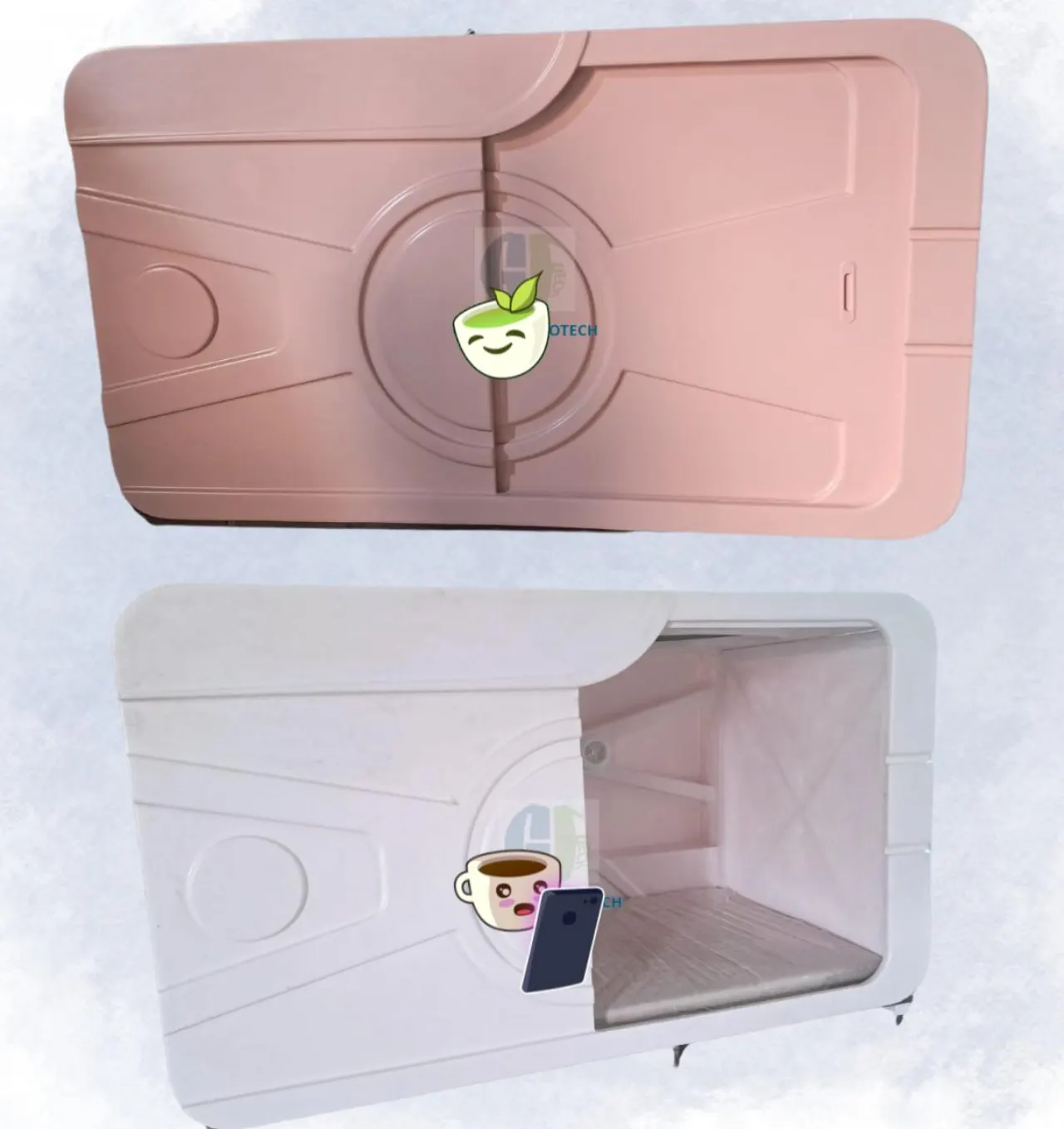
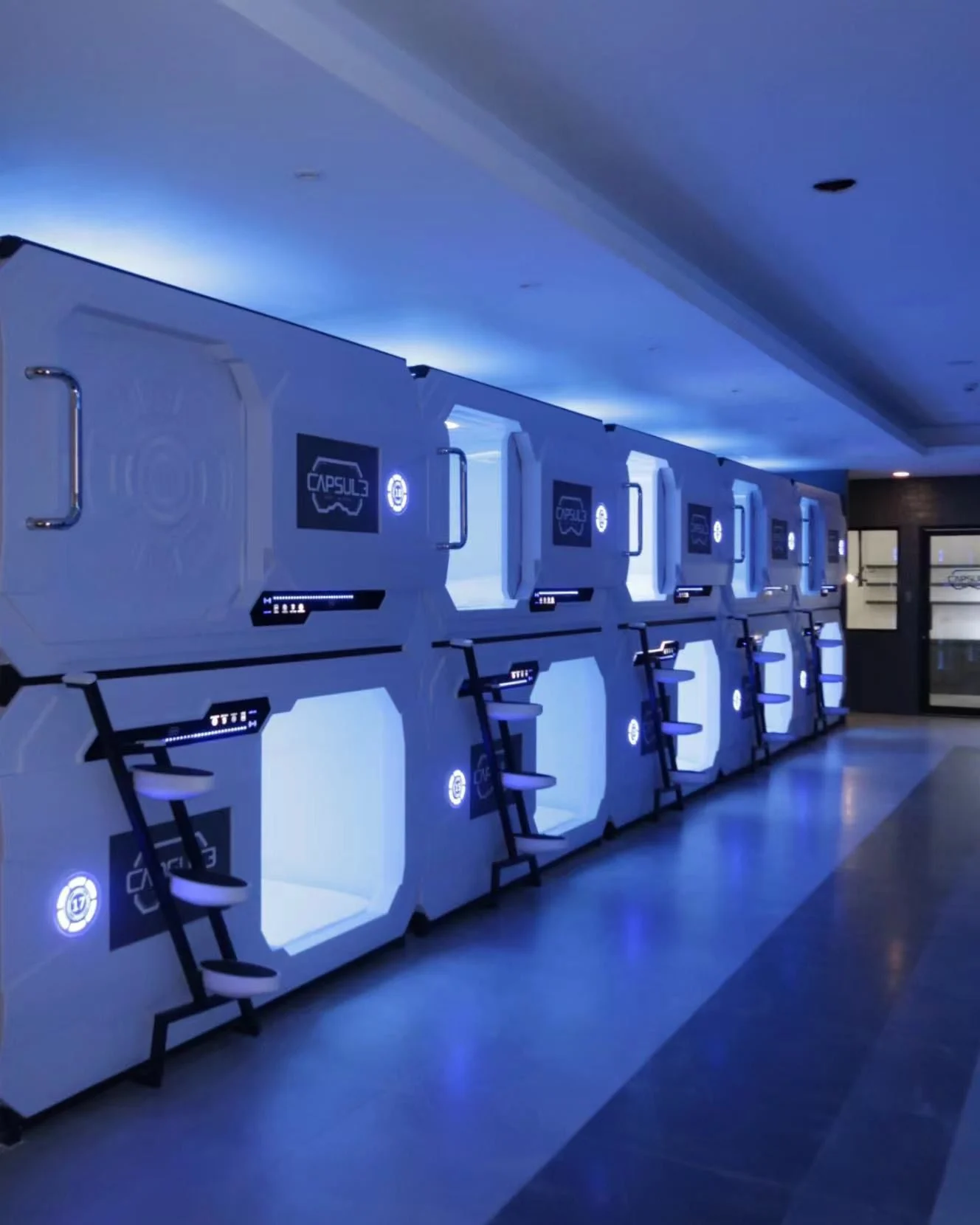
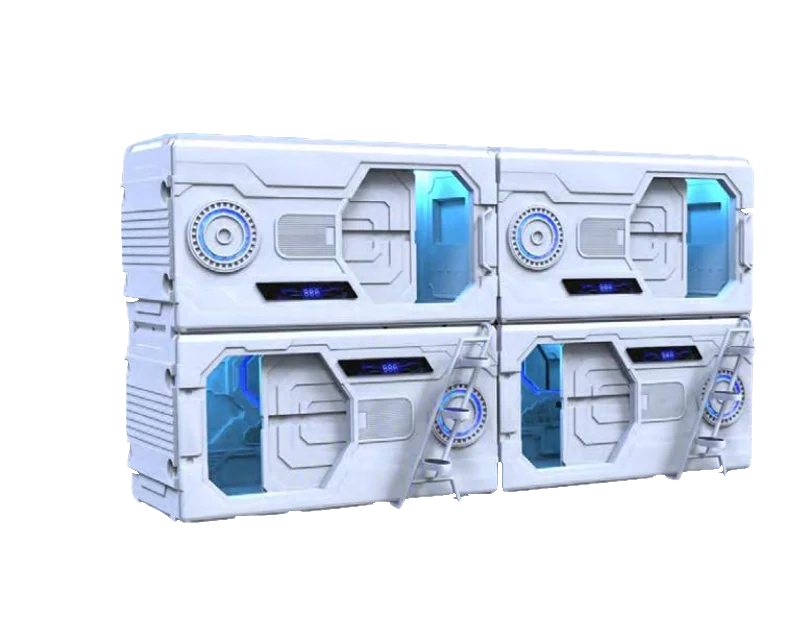
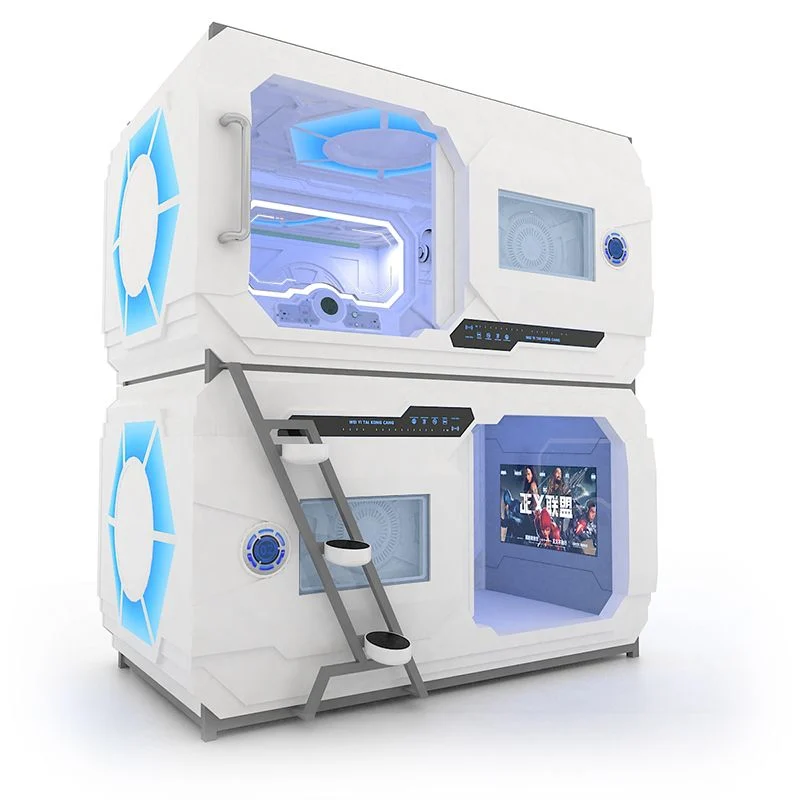
Capsule beds (also called sleeping pods, pod hotels, or capsule hotels) are compact, self-contained sleeping units engineered to maximize space efficiency while delivering a comprehensive guest experience. Unlike traditional cramped hostel bunks or expensive hotel rooms, capsule beds represent a third category—premium budget accommodation.
Core Components of Modern Capsule Beds
1. Structural Shell
- Material: Taiwan Chi-Mei ABS plastic (V0 fire-retardant grade) or high-grade FRP
- Dimensions: Typically 2060 × 1140 × 2400 mm (L×W×H) for single units
- Weight Capacity: 150-200 kg per unit
- Fire Safety: Meets IS 1641 and international standards
- Durability: 12-15 year lifespan with proper maintenance
2. Ventilation System
- Fresh Air Circulation: 25-35 m³/hour
- Filtration: HEPA filters (optional in premium models)
- Noise Level: 28-35 dB (whisper-quiet operation)
- Energy Consumption: 35-50W per pod
3. Climate Control
- Individual AC Vents: Personal temperature control
- Range: 18-28°C adjustable
- Humidity Management: Built-in dehumidification
- Power Consumption: 150-250W per pod (vs 1500W for hotel room)
4. Technology Integration
- LED Lighting: Dimmable, 3000K-5000K color temperature
- Power Outlets: 2-4 outlets (220V), USB-C fast charging
- Entertainment: TV module slots (17-24 inch), Bluetooth speakers
- Connectivity: Dedicated Wi-Fi access points
- Security: Biometric/RFID/mechanical locks
5. Interior Comfort
- Mattress: High-density foam (180-220 GSM), orthopedic support
- Pillows: Memory foam or microfiber
- Bedding: Hotel-grade linens, hypoallergenic
- Storage: 25-40L secure storage compartment
- Privacy: Blackout curtains or frosted acrylic doors
Evolution: Three Generations of Capsule Beds
| Generation | Era | Key Features | Target Market |
|---|---|---|---|
| Gen 1 | 1970s-1990s | Basic plastic tubes, shared facilities, minimal amenities | Salarymen, budget travelers |
| Gen 2 | 2000s-2015 | TV integration, better ventilation, improved privacy | Budget hotels, hostels |
| Gen 3 | 2016-Present | Smart controls, luxury interiors, IoT integration, sustainability | Premium budget, corporate, airports |
The Japanese Innovation Story: Lessons for India
Origin: Tokyo's Nakagin Capsule Tower (1972)
The concept emerged from architect Kisho Kurokawa's Metabolism movement, which envisioned adaptable, space-efficient urban living. The first commercial capsule hotel, Capsule Inn Osaka (1979), was designed for businessmen who missed the last train home.
Original Constraints Driving Innovation:
- Tokyo land costs: $5,000-10,000 per sq ft (equivalent)
- Average apartment: 25-40 sq meters (270-430 sq ft)
- Long commute times: 90+ minutes average
- After-work drinking culture requiring overnight stays
Indian Parallels Today:
- Mumbai land costs: ₹40,000-60,000 per sq ft in business districts
- Bangalore hotel occupancy: 72-85% year-round
- Delhi NCR real estate crisis: 35% annual price growth
- Growing millennial travel: 250 million trips annually
Why Japan Succeeded (And How India Can Replicate)
| Success Factor | Japan (1979-2000) | India (2024-Present) |
|---|---|---|
| Cultural Acceptance | Collectivist society, privacy not paramount | Growing acceptance among millennials, Gen Z |
| Space Constraints | Extreme urban density | Rapidly densifying metros |
| Price Sensitivity | Middle-class cost consciousness | 65% travelers seek budget options |
| Technology Adoption | Early tech integration | Smartphone penetration 85%+ |
| Tourism Growth | 4 million (1980) → 32 million (2019) | 10.9 million (2019) → projected 30 million (2030) |
Chapter 2: The Compelling Business Case for Capsule Hotels
Space Optimization: The Core Advantage
Comparative Analysis: Traditional vs Capsule Hotel
Scenario: 3,000 Sq Ft Property
Option A: Traditional Budget Hotel
- Configuration: 12 rooms @ 250 sq ft each
- Capacity: 24 guests (double occupancy)
- Common Areas: 20% (600 sq ft)
- Revenue per Sq Ft: ₹12-15 per day
Option B: Capsule Hotel
- Configuration: 100 capsule pods
- Capacity: 100 guests
- Common Areas: 30% (900 sq ft for bathrooms, lounge)
- Revenue per Sq Ft: ₹40-50 per day
Result: 4.2x more guests, 3.3x more revenue per sq ft
Real-World Space Utilization Data
Based on 50+ operational capsule hotels in India (2024 data):
| Metric | Traditional Hotel | Capsule Hotel | Improvement |
|---|---|---|---|
| Guests per 1000 sq ft | 8-12 | 30-35 | +266% |
| Revenue per sq ft/year | ₹4,500-5,500 | ₹15,000-18,000 | +276% |
| Staff per 50 guests | 12-15 | 5-7 | -53% |
| Cleaning time per unit | 30-45 min | 10-15 min | -67% |
| Utility cost per guest/night | ₹180-250 | ₹60-90 | -64% |
Financial Modeling: Detailed ROI Analysis
Model 1: Mumbai Andheri Capsule Hotel (100 Pods)
Location Context:
- Area: Andheri East, near metro station
- Target: Business travelers, budget tourists, IT professionals
- Competition: 15 budget hotels within 2km radius
- Average hotel rate in area: ₹2,500-3,500
Investment Breakdown:
| Category | Item | Cost (₹) |
|---|---|---|
| Property | 3,500 sq ft lease deposit (refundable) | 35,00,000 |
| Capsule Pods | 100 pods @ ₹2,50,000/set (Made-in-India) | 2,50,00,000 |
| Site Preparation | Flooring, electrical, plumbing | 25,00,000 |
| Common Facilities | 10 bathrooms (premium grade) | 20,00,000 |
| Reception, lounge, co-working area | 15,00,000 | |
| Technology | PMS software, booking engine | 8,00,000 |
| Wi-Fi infrastructure (enterprise grade) | 3,00,000 | |
| Smart locks, CCTV, fire safety | 7,00,000 | |
| Interior Design | Branding, signage, aesthetics | 12,00,000 |
| Licenses & Legal | Tourism license, fire NOC, etc. | 6,00,000 |
| Pre-opening | Staff training, marketing, soft launch | 8,00,000 |
| Working Capital | 3-month operating reserve | 18,00,000 |
| Contingency | 10% buffer | 40,00,000 |
| TOTAL INVESTMENT | ₹4,47,00,000 |
Revenue Projections (Conservative):
| Month | Occupancy | Avg Rate (₹) | Daily Revenue (₹) | Monthly Revenue (₹) |
|---|---|---|---|---|
| 1-3 | 45% | 1,000 | 45,000 | 13,50,000 |
| 4-6 | 60% | 1,100 | 66,000 | 19,80,000 |
| 7-12 | 75% | 1,200 | 90,000 | 27,00,000 |
| 13-24 | 80% | 1,250 | 1,00,000 | 30,00,000 |
| 25+ | 85% | 1,300 | 1,10,500 | 33,15,000 |
Operating Expenses (Monthly @ 85% occupancy):
| Expense Category | Amount (₹) | % of Revenue |
|---|---|---|
| Rent | 4,50,000 | 13.6% |
| Salaries (12 staff) | 6,00,000 | 18.1% |
| Electricity | 1,20,000 | 3.6% |
| Water & Utilities | 40,000 | 1.2% |
| Housekeeping Supplies | 80,000 | 2.4% |
| Internet & Technology | 35,000 | 1.1% |
| Marketing & OTA Commissions | 3,30,000 | 10.0% |
| Maintenance | 60,000 | 1.8% |
| Insurance | 25,000 | 0.8% |
| Miscellaneous | 50,000 | 1.5% |
| TOTAL EXPENSES | 16,90,000 | 51.0% |
Profitability Timeline:
| Metric | Year 1 | Year 2 | Year 3 |
|---|---|---|---|
| Avg Monthly Revenue | ₹21,00,000 | ₹31,00,000 | ₹33,15,000 |
| Avg Monthly Expense | ₹14,00,000 | ₹16,50,000 | ₹16,90,000 |
| Monthly Profit | ₹7,00,000 | ₹14,50,000 | ₹16,25,000 |
| Annual Profit | ₹84,00,000 | ₹1,74,00,000 | ₹1,95,00,000 |
| Cumulative Profit | ₹84,00,000 | ₹2,58,00,000 | ₹4,53,00,000 |
| ROI Achieved | 18.8% | 57.7% | 101.3% |
Payback Period: 30-32 months
5-Year NPV (at 10% discount rate): ₹6.85 Crores
IRR: 42.3%
Model 2: Bangalore Budget Capsule Hotel (60 Pods)
Target Market: IT professionals, budget travelers, students
Total Investment: ₹2.2 Crores (Made-in-India pods)
Average Occupancy: 70%
Average Rate: ₹950
Monthly Profit: ₹7-9 Lakhs
Payback Period: 24-28 months
IRR: 38.5%
Comparative Economics: Why Capsule Hotels Win
Revenue per Square Foot Analysis
| Hotel Type | Investment per sq ft | Revenue per sq ft/month | Breakeven Months |
|---|---|---|---|
| Budget Hotel | ₹6,000-8,000 | ₹400-550 | 42-48 |
| Mid-range Hotel | ₹12,000-15,000 | ₹600-800 | 48-60 |
| Capsule Hotel | ₹12,000-14,000 | ₹1,100-1,400 | 28-36 |
Key Insight: Despite similar per-sq-ft investment, capsule hotels generate 2.5x more revenue due to higher guest density.
Chapter 3: Market Segmentation & Target Audiences
Primary Target Segments in India
1. Solo Business Travelers (35% of market)
Profile:
- Age: 25-45 years
- Income: ₹6-15 Lakhs annually
- Travel Frequency: 8-15 nights/month
- Budget: ₹1,000-1,500 per night
- Priorities: Location > Amenities > Price
Needs Met by Capsule Hotels:
- ✅ Prime locations near business districts
- ✅ All-night check-in flexibility
- ✅ Work-friendly environment (Wi-Fi, desks)
- ✅ Cost savings vs traditional hotels (50-60% less)
- ✅ Privacy and security
Example Customer: Rahul, 32, software consultant, travels to client sites 12 days/month, prefers capsule hotels near tech parks to save ₹30,000/month on accommodation.
2. Budget Tourists & Backpackers (30% of market)
Profile:
- Age: 18-35 years
- Income: ₹3-8 Lakhs annually
- Travel Style: Extended trips, multiple cities
- Budget: ₹600-1,200 per night
- Priorities: Price > Location > Social Experience
Needs Met:
- ✅ Significant cost savings (vs ₹2,500+ hotels)
- ✅ Social common areas for networking
- ✅ Central locations near attractions
- ✅ Clean, modern facilities
- ✅ Flexible booking (daily, weekly)
- 40% less electricity usage
- Centralized systems
4. Scalability
- Easy to add/remove pods
- Flexible layout configurations
- Quick setup time (30-45 days)
Challenges & Solutions
Challenge 1: Guest Privacy Concerns
Solution: Premium pods with solid doors, soundproofing, and blackout features
Challenge 2: Claustrophobia
Solution: Adequate ventilation, spacious designs (2m+ length), personal controls
Challenge 3: Cultural Acceptance
Solution: Education, trial programs, positive reviews, gradual market development
Challenge 4: Regulatory Compliance
Solution: Fire safety certifications, proper licensing, building code adherence
Future Trends in India's Capsule Hotel Market
1. Smart Capsule Hotels
- AI-powered personalization
- Biometric security
- Health monitoring sensors
- Automated climate optimization
2. Themed Capsule Experiences
- Luxury pods with premium amenities
- Gaming-focused pods
- Wellness & meditation pods
- Work-from-pod concepts
3. Sustainability Focus
- Solar-powered facilities
- Eco-friendly materials
- Water recycling systems
- Carbon-neutral operations
4. Expansion to Tier-2/3 Cities
- Pilgrimage destinations
- Tourist hotspots
- Educational hubs
- Industrial areas
Market Size & Growth
Current Market (2025):
- 150+ capsule hotels in India
- 8,000+ pod installations
- Market size: ₹400 Crores
Projected Growth (2030):
- 500+ capsule hotels
- 35,000+ pod installations
- Market size: ₹1,500 Crores
- CAGR: 30-35%
Top Cities for Capsule Hotels in India
- Mumbai - Business travelers, maximum real estate costs
- Bangalore - IT professionals, startup ecosystem
- Delhi NCR - Transit hub, diverse clientele
- Pune - Students, young professionals
- Hyderabad - Growing IT sector
- Chennai - Industrial & tech workers
- Kolkata - Budget travelers
- Ahmedabad - Business hub
- Jaipur - Tourism
- Goa - Backpackers & tourists
How to Start a Capsule Hotel Business
Step 1: Market Research
- Identify target location
- Analyze competition
- Study demand patterns
- Calculate feasibility
Step 2: Space Planning
- 1000-3000 sq ft for 40-120 pods
- Common areas (15-20% of space)
- Bathroom facilities (1:8-10 ratio)
- Emergency exits & fire safety
Step 3: Pod Selection
- Choose between imported/Made-in-India
- Select features based on budget
- Consider maintenance requirements
- Negotiate bulk pricing
Step 4: Licensing
- Hotel license
- Fire NOC
- Health department clearance
- GST registration
- Local permits
Step 5: Technology Setup
- Booking engine integration
- Payment gateway
- Property management system
- Guest app
Step 6: Marketing & Launch
- Digital marketing campaigns
- OTA partnerships (MakeMyTrip, Goibibo)
- Social media presence
- Influencer collaborations
Why Choose BIDUA Pods for Your Hotel
Complete Solutions Provider
- ✅ Both imported & Made-in-India options
- ✅ 10+ product series to choose from
- ✅ Customization available
- ✅ Installation guidance
- ✅ After-sales support
Competitive Pricing
- Imported Series: ₹1,61,200-2,02,800 per set
- Made-in-India: ₹2,00,000-3,00,000 per set
- Bulk discounts available
- Flexible payment terms
Quality Assurance
- Taiwan Chi-Mei fire-retardant ABS
- ISO-certified materials
- 1-year electronics warranty
- Proven in 25+ countries
Conclusion
Capsule beds are not just a trend but a fundamental shift in the hospitality industry. They offer:
- Higher profitability for hotel owners
- Affordable luxury for guests
- Sustainable and efficient operations
- Future-ready accommodation
The Indian market is ripe for this revolution, with growing acceptance, improving infrastructure, and increasing demand for budget-friendly premium accommodations.
Start Your Capsule Hotel Journey Today!
📱 WhatsApp: +91 9512921903
📧 Email: [email protected]
🌐 Website: https://biduapods.com
Get a detailed business plan and quotation for your capsule hotel project!
Keywords: capsule beds hotel industry, hotel capsule beds India, capsule hotel business India, sleeping pods hotels, pod hotel investment, budget hotel solutions, space-efficient accommodation
Related capsule pod hotel keywords
These related phrases help buyers compare capsule hotels, pod hotels, sleep pods and compact smart-stay formats for hospitality, transit, hostel, office and hospital projects.
Popular discovery phrases: sleeping in a drawer, futuristic sleep, nook and cranny comfort.
About Rajesh Kumar
Hospitality Consultant
Rajesh Kumar is an expert in the sleeping pod and hospitality industry, with extensive experience in product development and market analysis.